

Our products




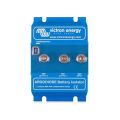
FET splitters allow multiple batteries to be charged from a single alternator or battery charger without connecting them together.
Thus, discharging one battery will not affect the other batteries. Unlike diode splitters, FET splitters have low voltage loss, generally less than 0.02 Volts for low currents and on average 0.1 Volt for higher currents
Diode splitters allow multiple batteries to be charged simultaneously from a single alternator, without connecting the batteries to each other. During discharge too, the batteries remain isolated, so using the service battery, for example, will not discharge the starter battery.
Diode battery combiners allow multiple batteries to be charged simultaneously from a single alternator, without connecting these batteries to each other. When discharging, the batteries also remain isolated; for example, using the service battery will not discharge the starter battery.
Diode splitters allow multiple batteries to be charged simultaneously from a single alternator, without connecting these batteries to each other. During discharge too, the batteries remain isolated, the use of the service battery, for example, will not discharge the starter battery.
Diode splitters allow multiple batteries to be charged simultaneously from a single alternator, without connecting these batteries together.
During discharge too, the batteries remain isolated, so using the service battery, for example, will not discharge the starter battery.