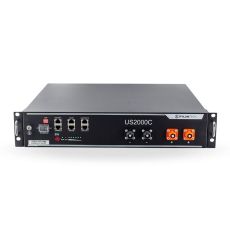
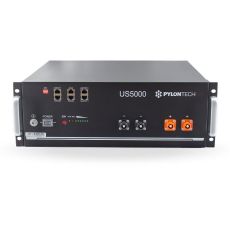
Description
SuperPack batteries are very easy to install, and require no additional components.
The internal switch will disconnect the battery in case of excessive discharge or high temperature.
Batteries can be connected in parallel. Series connection is not allowed.
Integrated safety switch and BMS
SuperPack batteries are very easy to install, and require no additional components.
The internal switch will disconnect the battery in case of excessive discharge or high temperature.
Capable of withstanding damaging use
A lead-acid battery will fail prematurely due to sulfation:
- If it operates in a deficit mode for extended periods (i.e., the battery is rarely or never fully charged).
- If it is left partially charged, or worse, fully discharged.
It is not necessary to fully charge a lithium-ion battery. Lifespan even improves slightly with partial charging instead of full charging. This is one of the major advantages of lithium-ion batteries over lead-acid batteries.
SuperPack batteries will cut off charging or discharging current when maximum capacities are exceeded.
Efficient
For many applications (especially off-grid solar applications), energy efficiency can be crucial.
The round-trip energy efficiency – discharge from 100% to 0% and back to 100% charged – of an average lead-acid battery is 80%.
The round-trip energy efficiency of a lithium-ion battery is 92%.
The charging process for lead-acid batteries becomes particularly inefficient when the state of charge reaches 80%, resulting in efficiencies of 50% or even less for solar systems when several days of backup energy are needed (battery operating at a state of charge of 70% to 100%).
In contrast, a lithium-ion battery will achieve 90% efficiency even under light discharge conditions.
Parallel connection possible
Batteries can be connected in parallel. Series connection is not allowed.
Only to be used in a vertical position.