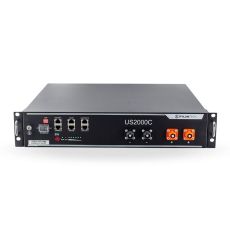
Description
Lithium Battery Smart 12.8V
A lead-acid battery will fail prematurely due to sulfation:
• If it operates in a deficient state of charge for extended periods (i.e. the battery is rarely or never
fully charged).
• If it is left in a partially charged, or worse, fully discharged state (for yachts or mobile homes during
winter).
An LFP battery:
• Does not need to be fully charged. Lifespan even slightly increases when kept in a partially charged state rather than a fully charged state. This is a major advantage of the LFP battery over the lead-acid battery.
• These batteries have other advantages such as a wide operating temperature range, excellent cycle performance, low internal resistance and high efficiency (see below).
An LFP battery is therefore the chemistry of choice for demanding applications.
Battery Management System (BMS)
The BMS:
1. Triggers a pre-alarm as soon as the voltage of a battery cell drops below 3.1 V (adjustable setting between 2.85 and
3.15 V).
2. Disconnects or switches off the load whenever the voltage of a battery cell drops below 2.8 V (adjustable setting between 2.6 and 2.8 V).
3. Stops the charging process whenever the voltage of a battery cell exceeds 3.75 V or when the temperature becomes
too high or too low.